
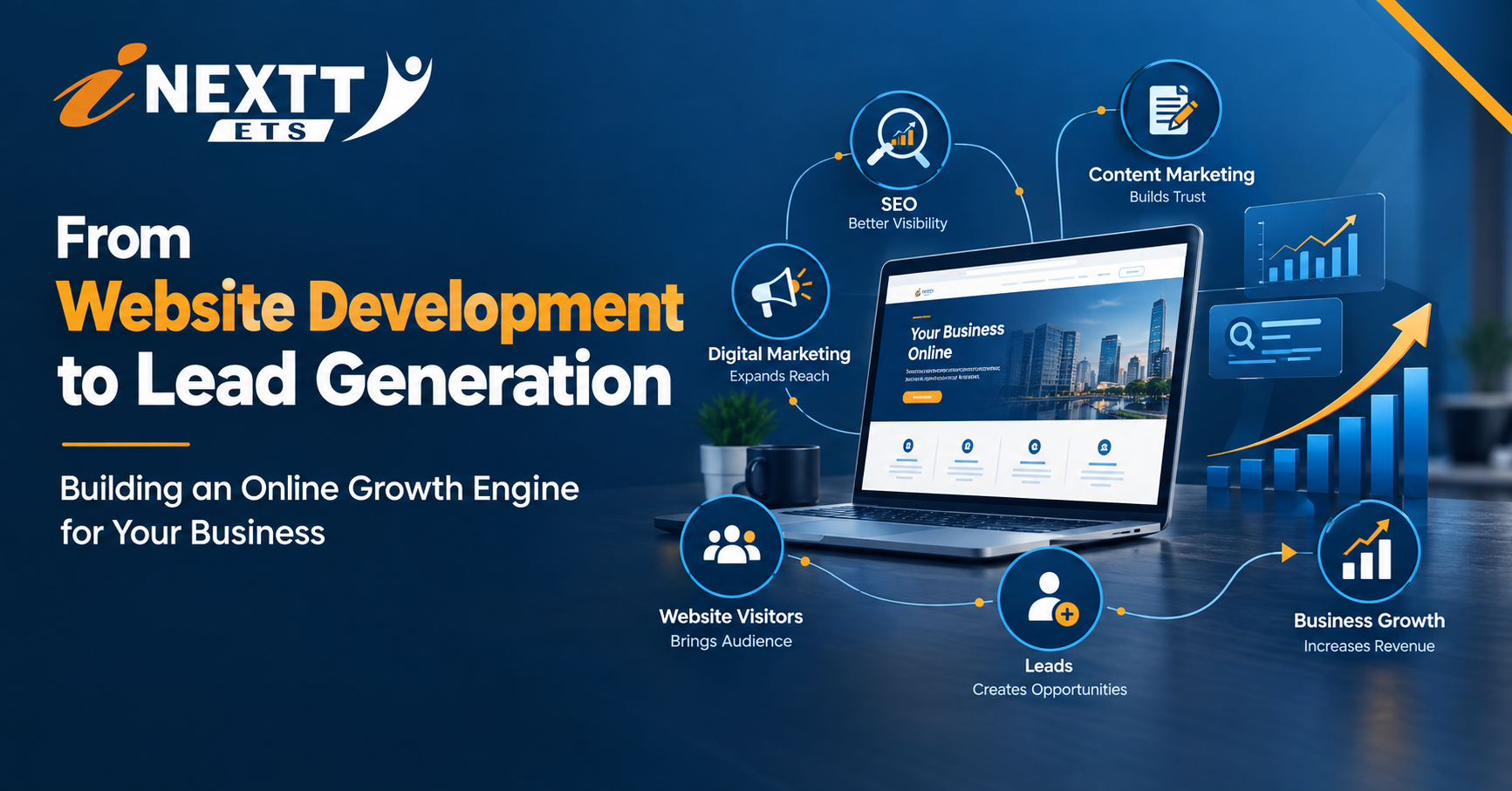
From Website Development to Lead Generation: Building an Online Growth Engine for Your Business
How Website Development, SEO, Digital Marketing, and Lead Generation Work Together to Drive Sustainable Business Growth
In today's digital-first business environment, having an online presence is no longer enough. Customers search online before contacting a business, compare different options, visit websites, read reviews, and often make their first impression of a company without ever speaking to a salesperson.
That makes your website much more than an online brochure.
A well-planned website can become the foundation of your entire digital marketing strategy — attracting visitors through SEO, supporting paid advertising campaigns, building trust, and turning interested prospects into qualified leads.
This is where website development and lead generation need to work together.
A visually appealing website that does not generate enquiries may not be achieving its full business potential. Similarly, running digital advertising without a properly optimized landing page can result in traffic without meaningful conversions.
The real opportunity lies in connecting the complete digital journey:
Website Development → SEO & Content → Digital Marketing → Lead Generation → Customer Acquisition → Business Growth
At iNext ETS, the focus is on building this connected digital ecosystem — from website development and mobile applications to SEO, performance marketing, content marketing, and lead generation.
It All Starts With a Strong Website
Your website is often the first serious interaction a potential customer has with your business.
When someone searches for a service and lands on your website, they are immediately evaluating several things:
Does this business offer what I need?
Does the website look trustworthy?
Can I easily understand the services?
Is the website fast and mobile-friendly?
Can I find contact information quickly?
Is there an easy way to enquire or book a service?
This is why professional website development is about much more than creating attractive pages.
A business website needs to combine design, technology, usability, SEO, performance, security, and conversion-focused elements.
What Makes a Business Website Effective?
A professional website development company in Bhopal may consider several important elements when building a business website:
Responsive Website Development
Most customers access websites from smartphones. A responsive website automatically adapts its layout and content to different screen sizes, providing a consistent experience across mobile devices, tablets, and desktops.
SEO-Friendly Website Development
SEO should not be treated as something that is added after a website is completed.
A search-engine-friendly website structure can include:
Clean URLs
Proper heading hierarchy
Search-friendly page structure
Optimized metadata
Mobile responsiveness
Fast-loading pages
Internal linking
Image optimization
Structured data where appropriate
Crawlable and indexable content
Building these elements into the website from the beginning can provide a stronger technical foundation for future SEO services.
Custom Website Development
Every business does not need the same website.
A simple service business may need an enquiry-focused website, while an organization with complex workflows may require custom dashboards, integrations, booking systems, customer portals, or other web applications.
Custom website development allows the website to be designed around specific business requirements rather than forcing the business into a generic template.
E-Commerce Website Development
For businesses selling products online, an e-commerce website needs to do more than display products.
It should make the customer journey simple — from discovering a product to understanding its benefits, adding it to the cart, completing payment, and receiving order information.
Website Development Using Modern Technologies
Depending on the project requirements, businesses may use technologies and platforms such as:
WordPress
React
Next.js
Custom web applications
E-commerce platforms
API integrations
Cloud-based solutions
The right technology should be selected according to the business requirement, scalability, functionality, budget, and maintenance needs.
A Website Should Be Built for People, Not Just Search Engines
SEO is important, but a website should never be created only for search engines.
The person visiting the website is ultimately the one who may become a customer.
That means content should answer questions clearly, navigation should be intuitive, and important information should be easy to find.
For example, a service page should clearly explain:
What the service is
Who it is for
What problems it solves
Why the business provides it
What the next step is
How the customer can get in touch
This combination of SEO and user experience creates a website that can attract relevant visitors while also helping those visitors take action.
Mobile Apps: When a Website Isn't Enough
A website is not always the complete solution.
Businesses that require frequent customer interaction may benefit from a dedicated mobile application.
Consider businesses that need:
Online bookings
Customer accounts
Order management
Loyalty programs
Appointment scheduling
Notifications
In-app payments
Service tracking
Customer support
For these use cases, mobile app development can create a more direct and convenient customer experience.
A professional mobile app development company can develop applications based on the specific requirements of a business rather than simply replicating a website inside an app.
Mobile App Development Services
Depending on the project, mobile development may include:
Android app development
iOS app development
Cross-platform app development
Flutter app development
React Native development
Custom mobile app development
App UI/UX design
API and third-party integrations
Mobile app maintenance
The goal should not simply be to create an app with numerous features.
A successful application should make important customer actions easier.
The Real Question: How Do You Turn Website Traffic Into Leads?
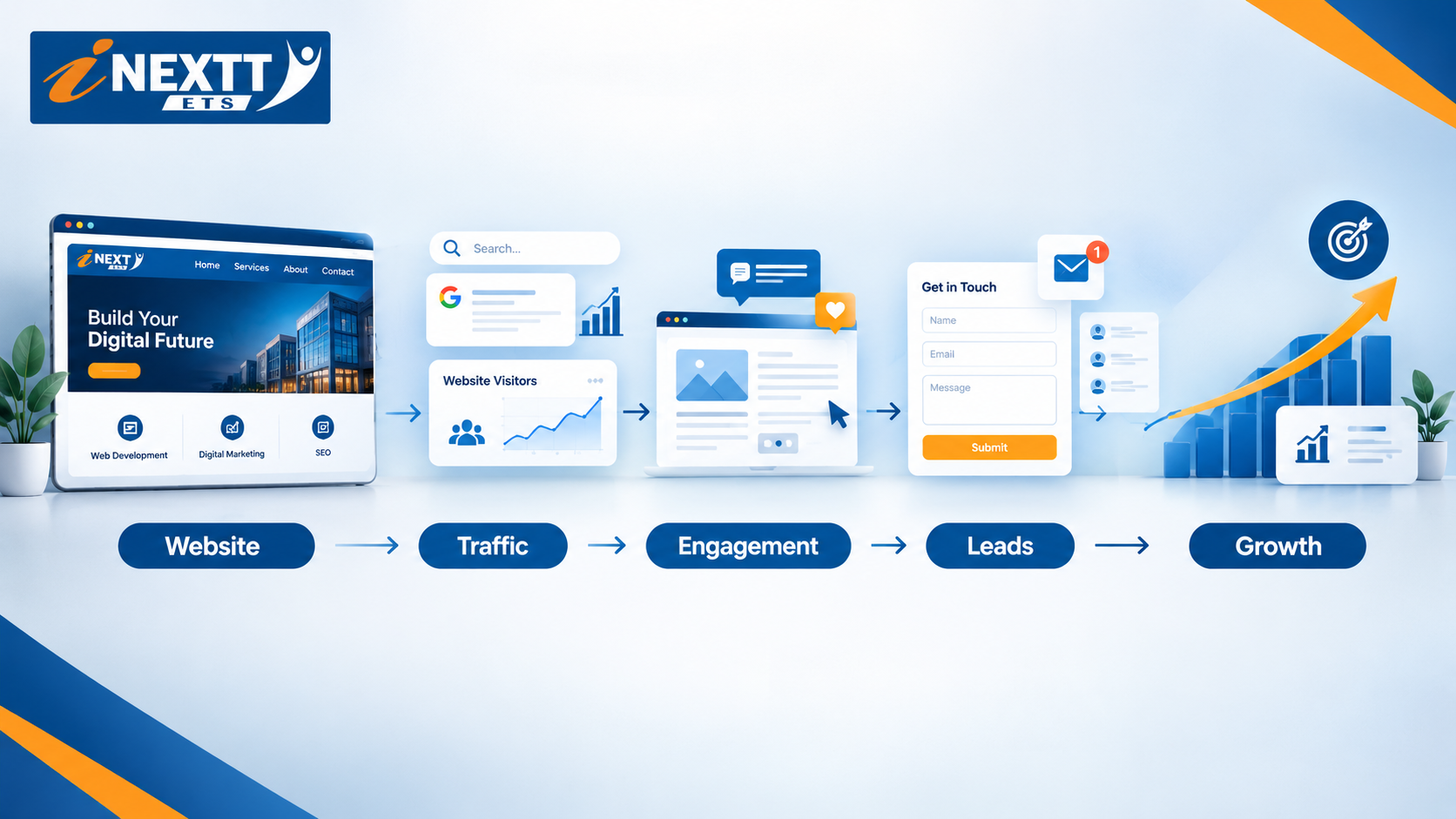
Getting people to your website is only one part of digital growth.
The bigger question is:
What happens after they arrive?
A business may receive website visitors through Google, social media, advertisements, referrals, or other channels. But if those visitors cannot easily understand the offer or contact the business, traffic may not translate into enquiries.
This is where lead generation becomes important.
Lead generation is the process of attracting potential customers and encouraging them to take a meaningful action, such as:
Filling out an enquiry form
Calling the business
Requesting a quotation
Booking a consultation
Sending a WhatsApp enquiry
Registering for a service
Downloading a resource
Scheduling a meeting
A strong lead generation strategy starts with understanding the target audience and their buying journey.
B2B and B2C Lead Generation Require Different Approaches
Not every customer makes a purchase decision in the same way.
B2B Lead Generation
B2B lead generation often involves longer decision-making processes.
A potential business customer may want to understand:
Company experience
Services offered
Technical capabilities
Pricing or quotation process
Case studies
Previous projects
Expertise
Support and maintenance
For B2B businesses, the website and marketing strategy should help build credibility before the sales conversation begins.
B2C Lead Generation
B2C lead generation can involve faster decision-making, depending on the product or service.
Clear offers, simple landing pages, social proof, easy enquiry options, and strong calls to action can help reduce friction in the customer journey.
The important point is that qualified lead generation should focus on relevance and intent rather than simply increasing the number of enquiries
Website + Performance Marketing = A Connected Conversion Journey
Paid advertising can bring highly targeted traffic to a business website.
But an advertisement is only the beginning of the journey.
For example:
Google Search → Advertisement → Landing Page → Enquiry Form → Lead → Sales Follow-Up
Every step matters.
If the advertisement promises one thing but the landing page communicates something completely different, users may leave.
This is why Google Ads management, Meta Ads, PPC campaigns, and landing page development should be considered together.
Conversion-Focused Digital Advertising
A good performance marketing strategy can involve:
Audience research
Keyword research
Campaign structure
Ad copy
Landing page optimization
Conversion tracking
Remarketing
Budget management
Performance analysis
The objective is not simply to generate clicks.
The objective is to connect advertising activity with meaningful business actions.
Conversion Rate Optimization: Make More of the Traffic You Already Have
Imagine two websites receive the same amount of traffic.
One generates significantly more enquiries than the other.
What creates the difference?
It can be the way the website handles conversion.
Conversion Rate Optimization (CRO) focuses on improving the user journey so that more relevant visitors take the desired action.
This may involve testing and improving:
Headlines
Calls to action
Contact forms
Landing pages
Page layouts
Trust elements
Navigation
Service descriptions
Mobile experience
Enquiry processes
Small improvements in the customer journey can make a meaningful difference when a website already receives consistent relevant traffic.
SEO and Content Marketing Build the Long-Term Discovery Engine
Paid advertising can provide immediate visibility while campaigns are active.
SEO takes a different approach.
With a well-planned SEO strategy, businesses can work toward improving their visibility for relevant searches over time.
The process may include:
Keyword Research
Keyword research services help identify the phrases and questions potential customers use when searching for products or services.
Instead of guessing what customers want, businesses can use search data to understand demand and build content around relevant topics.
On-Page SEO
On-page SEO can involve optimizing:
Page titles
Meta descriptions
Headings
Content
URLs
Internal links
Images
Search intent
Structured data
Technical SEO
Technical SEO focuses on the website's underlying structure and accessibility to search engines.
This can include:
Crawlability
Indexation
Site architecture
Mobile usability
Page performance
Canonicalization
XML sitemaps
Technical errors
SEO Content Writing
Useful content can help businesses answer the questions potential customers are already searching for.
Instead of creating content purely to insert keywords, effective SEO content writing should provide genuine information while naturally incorporating relevant search terms.
This can include:
Blog articles
Service pages
Location pages
Guides
FAQs
Case studies
Industry resources
Local SEO Helps Businesses Reach Nearby Customers
For businesses serving a specific city or region, local SEO services can be an important part of digital visibility.
Someone searching for:
"website development company in Bhopal"
has a different search intent from someone searching for:
"what is website development?"
The first search may indicate a stronger local commercial intent.
Local SEO can involve optimizing:
Google Business Profile
Local landing pages
Business information
Local citations
Reviews
Location-focused content
Local keyword targeting
Relevant backlinks
For businesses operating in Bhopal, local search optimization can help create stronger connections between online searches and local customers.
Also visit this :how-local-seo-services-help-businesses-get-more-customers-in-bhopal
Link Building and Off-Page SEO Strengthen Website Authority
Creating useful content is one part of SEO.
Building a website's authority is another.
Link building services focus on acquiring relevant backlinks from external websites. When earned through legitimate and relevant methods, backlinks can contribute to a website's overall search visibility and authority.
However, link building should focus on quality and relevance rather than simply collecting a large number of links.
A sustainable off-page SEO strategy can involve:
Relevant business listings
Industry websites
Digital PR
Guest contributions
Resource links
Content-based outreach
Brand mentions
The focus should always remain on creating a trustworthy online presence rather than generating links for the sake of numbers.
Content, SEO, Ads and Website Development Should Work Together
One of the biggest challenges businesses face is treating every digital marketing activity as a separate project.
The website team builds the website.
The SEO team works on rankings.
The social media team creates posts.
The advertising team runs campaigns.
The sales team handles enquiries.
But when these activities are not connected, valuable opportunities can be missed.
A better approach is to create a connected digital growth system.
For example:
SEO identifies a high-value search query.
↓
Content answers that search intent.
↓
The website provides the relevant service.
↓
A landing page encourages an enquiry.
↓
Performance marketing brings additional targeted traffic.
↓
Lead tracking measures enquiries.
↓
Sales follows up with qualified prospects.
This is where digital marketing becomes more than a collection of individual services.
It becomes a system.
Measuring What Actually Matters
A digital marketing campaign should not be evaluated only by impressions, likes, or website visits.
Businesses should also look at meaningful actions such as:
Qualified enquiries
Phone calls
Form submissions
WhatsApp enquiries
Consultation requests
Cost per lead
Conversion rate
Landing page performance
Organic search traffic
Returning visitors
Customer acquisition data
The exact metrics will vary depending on the business model and marketing objective.
The important thing is to connect marketing activity with measurable business goals.
Website Maintenance and Continuous Optimization Matter
Launching a website is not the end of the process.
Technology changes. Customer expectations change. Search behavior changes. Businesses introduce new services and products.
That is why website maintenance services and continuous optimization are important.
Regular maintenance may involve:
Security updates
Software updates
Performance improvements
Content updates
Broken-link checks
Backup management
Technical fixes
New feature implementation
Similarly, website redesign services may become necessary when an existing website no longer represents the business effectively or provides a good user experience.
A website should evolve as the business evolves.
The Complete Digital Growth Cycle
When website development, SEO, content, paid advertising, and lead generation are connected, the customer journey becomes easier to understand and optimize.
The process can be visualized as:
Website Development
↓
SEO & Content Marketing
↓
Organic & Paid Traffic
↓
Landing Pages & Conversion Optimization
↓
Lead Generation
↓
Lead Qualification & Follow-Up
↓
Customer Acquisition
↓
Measurement & Optimization
↓
Sustainable Digital Growth
This approach allows each part of the digital strategy to support the next.
Why Businesses Need an Integrated Digital Strategy
A website without visibility can struggle to attract visitors.
Traffic without a conversion-focused website can struggle to generate enquiries.
Advertising without proper tracking can make it difficult to understand campaign performance.
Content without a clear strategy may attract visitors who are not relevant to the business.
And lead generation without a proper follow-up process can leave valuable opportunities unused.
The solution is not necessarily to use every digital marketing channel.
Instead, businesses should identify the channels, technologies, and strategies that fit their audience, industry, objectives, and budget — and then connect those activities into one clear digital growth strategy.
Why Choose iNext ETS for Digital Growth?
At iNext ETS, website development and digital marketing can be approached as connected parts of a broader online growth strategy.
The digital services can include:
Website development
Custom web development
E-commerce website development
Mobile app development
UI/UX design
SEO services
Local SEO
Content marketing
Social media marketing
Performance marketing
Google Ads
Meta Ads
Lead generation
Website maintenance
Digital solutions for businesses
Instead of viewing a website as a standalone digital asset, the focus is on creating an online presence that supports visibility, customer engagement, and business enquiries.
Final Thoughts
Building an online presence is not simply about launching a website or running advertisements.
The real opportunity lies in connecting the entire digital customer journey.
A professionally developed website creates the foundation. SEO and content help people discover the business. Performance marketing can bring targeted traffic. Conversion optimization helps turn relevant visitors into enquiries. Lead generation and follow-up then move those opportunities toward business relationships.
In other words:
Your website should not just tell people that your business exists. It should help them understand what you offer, trust your brand, and take the next step.
With the right combination of website development, SEO, content marketing, performance marketing, and lead generation, businesses can build a digital ecosystem designed around their actual goals.
Transform Your Ideas Into Digital Reality
From website development to lead generation, iNext ETS brings digital solutions together to help businesses build a stronger online presence.
Explore iNext ETS:
www.inextets.com
iNext ETS — From Digital Presence to Digital Growth.