Generative Engine Optimization (GEO): How iNext ETS Helps Businesses Improve AI Search Visibility
Author: iNext ETS | Published Date: October 22, 2026 | Last Updated: October 22, 2026
A practical guide to GEO, AI search visibility, and the SEO foundations businesses should get right.
The way customers discover businesses online is evolving. Alongside traditional search engines, people use AI-powered search experiences to research services, compare solutions, and find answers. Businesses therefore need websites that are useful to visitors, technically accessible, trustworthy, and easy to understand.
Generative Engine Optimization (GEO) focuses on improving how website information can be understood and potentially referenced by AI-powered search systems. In this guide, iNext ETS explains the fundamentals of GEO, the SEO practices that support it, and practical steps businesses can take to strengthen their online visibility.
What Is Generative Engine Optimization (GEO)?
Generative Engine Optimization (GEO) is the practice of making a website’s information easier for AI-powered search experiences to understand, interpret, and potentially reference in answers. GEO works alongside SEO; it does not replace the need for useful content, technical accessibility, and a trustworthy website.
Why GEO Matters for Businesses
Customers may discover a business through traditional search results, AI-generated summaries, maps, or direct recommendations. A website with clear service information, helpful answers, consistent business details, and strong SEO basics is better prepared for these discovery paths. No agency can guarantee that an AI tool will mention a particular business, but a well-organized, credible website gives search systems better information to work with.
How AI Search Systems May Use Website Content
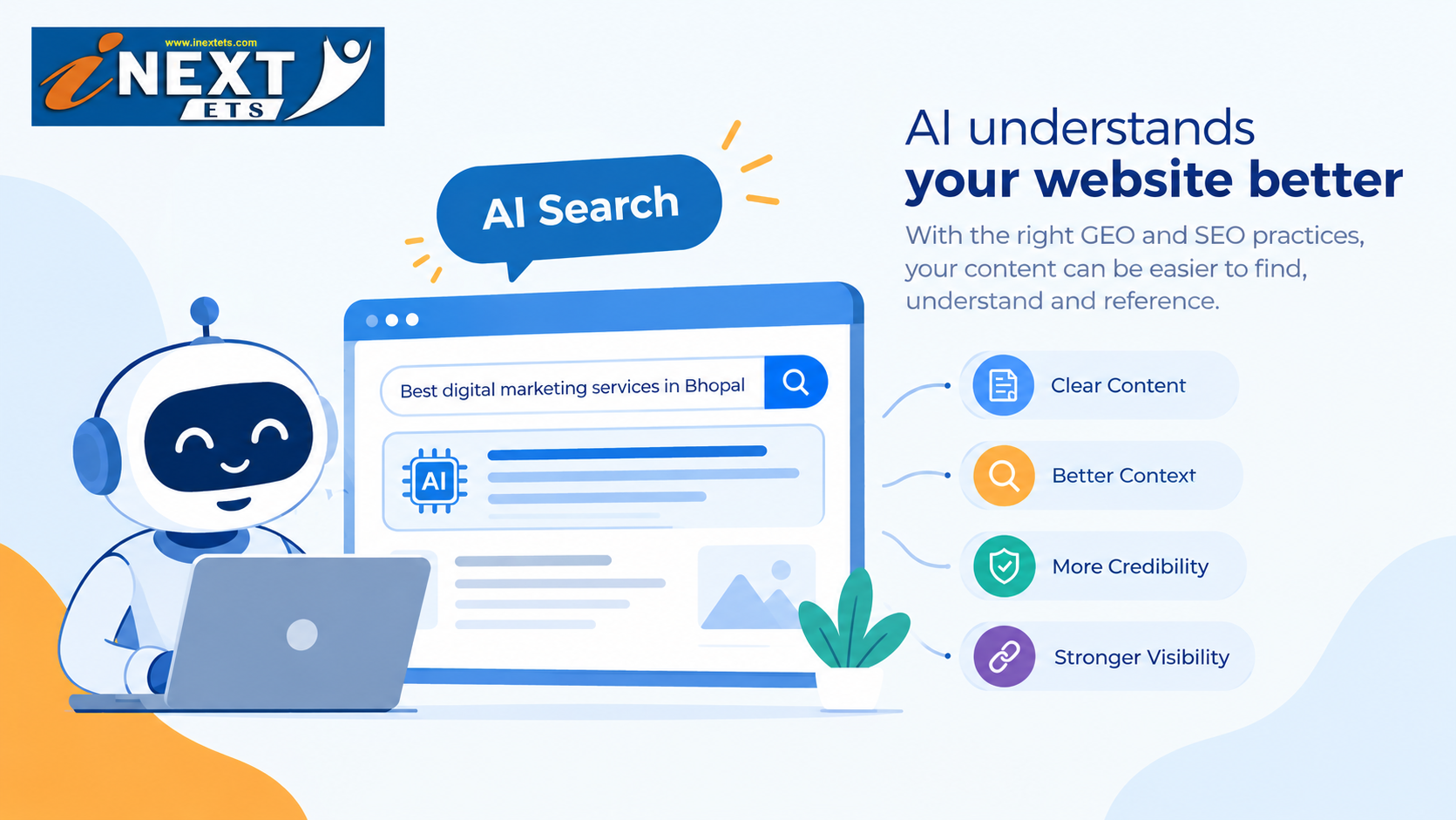
AI-powered search experiences may draw on web pages, search indexes, and other available sources. The exact process differs by platform, and not every page will be selected or cited. Businesses can strengthen their foundations by publishing direct answers, creating specific service pages, ensuring important content can be crawled and indexed, supporting claims with evidence, and using descriptive headings and meaningful internal links.
How iNext ETS Can Help Improve Your Search Visibility
SEO strategy:
Build pages around the services and search terms that matter to your business, with useful titles, headings, internal links, and content.
Website development:
Create fast, mobile-friendly, crawlable pages that make key services and contact details easy to find.
Digital marketing:
Connect organic search with relevant digital channels so potential customers can discover and understand your offering.
Lead generation:
Make service pages more action-oriented with clear benefits, proof points, contact options, and calls to action.
Content improvement:
Answer real customer questions directly, use specific examples, and keep information accurate and up to date.
A Practical Example: Make Service Content More Useful
Less helpful: “We provide the best digital marketing services to grow your business online.”
More helpful: “Our digital marketing services can include SEO, paid advertising, content strategy, and conversion-focused landing pages. The right approach depends on your audience, objectives, competition, and budget.”
Note: This is an illustrative example, not a claim about measured iNext ETS results.
7 Practical GEO and SEO Steps for Your Website
1. Answer a clear customer question.
Use headings that match what customers actually want to know, then answer in plain language.
2. Explain your services specifically.
Describe who each service is for, what it includes, and what problem it solves. Avoid vague, repetitive claims.
3. Keep core pages easy to navigate.
Use descriptive page titles, logical headings, working internal links, and a clear service structure.
4. Strengthen technical SEO.
Check mobile usability, page speed, indexability, canonical URLs, and sitemap coverage.
5. Show real business credibility.
Publish accurate company details, relevant experience, genuine case studies where available, and clear contact information.
6. Keep local information consistent.
For local businesses, make sure the business name, address, phone number, service areas, and Google Business Profile details are accurate.
7. Review performance regularly.
Use Google Search Console and analytics to monitor indexing, queries, clicks, and conversions. Improve pages based on evidence.
GEO vs Traditional SEO
Traditional SEO
Helps relevant pages become discoverable in search engines.
Focuses on relevance, technical accessibility, content quality, and authority signals.
Measures impressions, clicks, rankings, and conversions.
GEO-oriented content practices
Makes information clear and well-organized for AI-powered search experiences as well as people.
Builds on those foundations with direct answers, clear context, and useful structure.
Can also review relevant referrals and visible mentions where reliable data is available.
Common GEO Mistakes to Avoid
Avoid publishing large volumes of generic AI-written pages, repeating keywords unnaturally, making unsupported claims, or expecting special markup to guarantee AI citations. Prioritize original, helpful content and sound technical SEO instead.
Why Choose iNext ETS for SEO and Digital Growth?
iNext ETS brings together SEO, website development, digital marketing, and leadgeneration—so businesses can improve both how they are discovered and how their websites turn visitors into enquiries. Rather than treating GEO as a shortcut, the focus is on a stronger digital foundation: relevant pages, clear service messaging, technical accessibility, and measurable improvements.
Ready to Strengthen Your Online Visibility?
Make it easier for customers to understand your business. iNext ETS offers SEO, website development, digital marketing, and lead-generation services tailored to business goals.
Discuss your website and digital growth goals with iNext ETS.
Call: +91 9981122493
Website: