
When Does a Business Actually Need a Mobile App Development Company?
Introduction
A mobile app can be a valuable business tool, but not every business needs one. The decision should depend on how customers interact with the business, what problem the application would solve, and whether an app would provide a better experience than the existing website or process.
If you are considering working with a mobile app development company, the first question should not be which technology to choose or how many features to add. Instead, ask:
What specific problem would the app solve for customers or the business?
For a business with frequent bookings, repeat orders, personalised services, customer accounts, notifications, tracking, or mobile-specific requirements, an app may provide meaningful value. For an informational business or one with occasional customer interactions, a well-designed website may be enough.
This guide explains when a business may need an app, when a website can be sufficient, what technology options to consider, and what to prepare before starting mobile app development.
What Does a Mobile App Add to a Business?
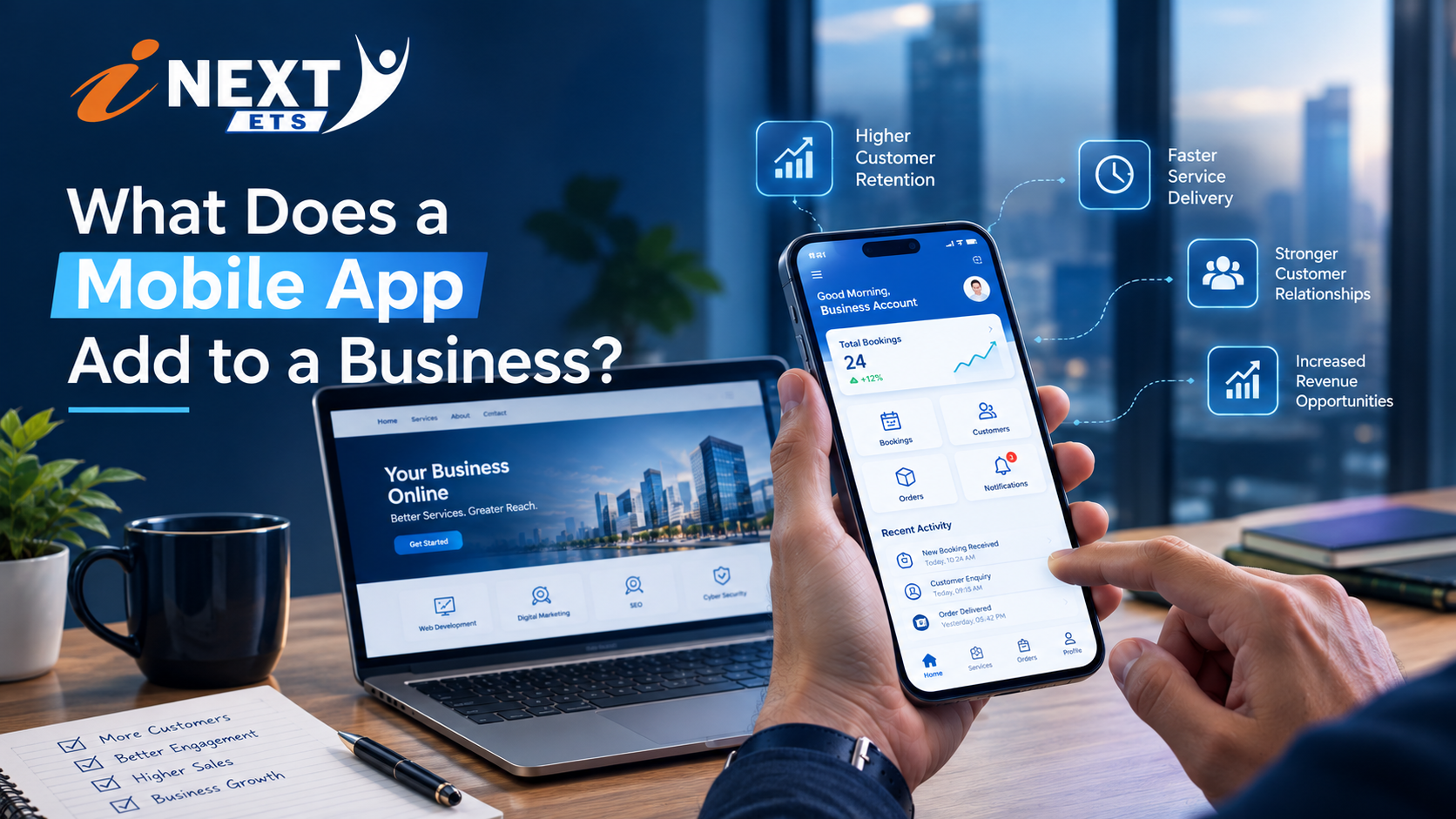
A website and a mobile app can serve different purposes.
A website is often important for discovery, information, enquiries, search visibility, and occasional customer actions. An app can focus more heavily on ongoing interactions with existing users.
Depending on the business model, an application may support:
Customer accounts and profiles
Repeat bookings or orders
Appointment management
Notifications and reminders
Personalised content
Service or delivery tracking
Loyalty and membership features
Location-based functionality
Camera or other device features
Faster access to frequently used services
The important point is that an app should solve a genuine business or customer problem.
Simply converting an existing website into an app does not automatically create additional value.
A mobile app can be useful when customers regularly interact with a business and need faster, more convenient access to its services. If you want to explore this topic in more detail, visit our guide on why mobile app development is essential for business growth in 2026.
why-mobile-app-development-is-essential-for-business-growth-in-2026
7 Signs Your Business May Need a Mobile App
1. Customers Use Your Service Frequently
Frequent customer interaction can make a dedicated application more useful.
For example, a fitness business could use an app for workout tracking, progress updates, and personalised plans. A restaurant could use an app to make repeat ordering easier.
If customers regularly return to your business, it may be worth evaluating whether an app can make those interactions more convenient.
2. Your Business Depends on Bookings, Orders, or Transactions
Businesses that handle frequent bookings, reservations, orders, or transactions may benefit from a dedicated mobile experience.
For example, a healthcare service could use an application for appointment requests, booking confirmations, and account-related information.
The important question is whether an app would make these repeated actions easier than the current process.
3. Customers Need Timely Updates
Some businesses need to communicate information at the right time.
Examples include:
Appointment reminders
Booking confirmations
Delivery updates
Service-status notifications
Schedule changes
An app can provide a dedicated environment for these interactions and notifications.
4. Customers Need Personalised Features
If customers need access to their own information, history, preferences, progress, or recommendations, an application can provide a more personalised experience.
For example, an education platform could allow students to see completed lessons, upcoming content, and individual progress.
Personalisation becomes particularly useful when users interact with the business regularly.
5. Your Service Uses Mobile-Specific Features
Some applications depend on features such as:
GPS and location
Camera access
Device storage
Bluetooth
Biometrics
Mobile notifications
When these capabilities are central to the user experience, an application may be more suitable than relying only on a standard website.
6. Your Website Does Not Handle Repeat Actions Conveniently
A website may be excellent for discovering a business but less convenient when customers repeatedly need to:
Log in
Track activity
Manage bookings
Place orders
View account information
Follow service updates
A mobile app can complement the website by creating a dedicated environment for these recurring activities.
7. You Have a Clear Use Case and a Maintenance Plan
An application is not finished when it is launched.
Businesses need to consider:
Bug fixes
Security
Performance
Compatibility
Testing
Updates
Customer support
Future improvements
A clear use case combined with realistic development and maintenance planning creates a stronger foundation for an app project.
Mobile App vs Website: Which Should You Choose?
The decision does not always have to be mobile app versus website.
In many cases, the website can support discovery and new customers while the application provides a better experience for existing customers and frequent users.
| Business Requirement | Website | Mobile App |
|---|---|---|
| Information and discovery | Usually suitable | Can complement the website |
| Occasional enquiries | Usually suitable | May not be necessary |
| Frequent repeat actions | Possible | Often more convenient |
| Bookings and orders | Possible | Can centralise repeat actions |
| Customer notifications | More limited | Strong use case |
| Personalised experience | Possible | Well suited to account-based experiences |
| Device-specific features | Depends on browser/device | Often better suited |
| Customer tracking | Possible | Can provide a dedicated experience |
| Ongoing maintenance | Required | Required, plus app-platform considerations |
When Is a Website Enough?
A website may be enough when the main customer requirements are:
Finding the business
Reading information
Viewing services
Making occasional enquiries
Contacting the business
Completing occasional transactions
When Does an App Add More Value?
A mobile application becomes more relevant when customers repeatedly need:
Accounts
Bookings
Orders
Notifications
Tracking
Personalised information
Device-specific features
The right choice depends on customer behaviour rather than simply following a technology trend.
Android, iOS, or Cross-Platform?
Platform selection should be based on the target audience, functionality, integrations, performance requirements, budget, testing requirements, and long-term maintenance.
Android App Development
An Android app development company or Android app development agency can help businesses create applications for Android users.
Before choosing Android as the initial platform, consider:
Where the target customers are
Required application features
Device compatibility
Third-party integrations
Performance
Testing requirements
Security
Maintenance
iOS App Development
iOS may be appropriate when Apple users represent an important part of the target audience or when the product requirements make the platform relevant.
Businesses should evaluate their audience, functionality, integrations, testing requirements, budget, and long-term support needs before making the decision.
Cross-Platform App Development
Cross-platform app development can be considered when a business needs applications for multiple platforms and wants to manage development efficiently.
However, the decision should still consider:
Performance
User experience
Feature requirements
Integrations
Testing
Budget
Long-term maintenance
There is no universal platform choice. The technology should follow the product requirements.
What to Discuss With a Mobile App Developer
Before contacting a mobile app developer or mobile app developers, prepare a clear outline of what the application should accomplish.
Pre-Development Checklist
Consider the following:
Who is the target audience?
What problem should the app solve?
What are the essential features?
Will users need registration and login?
Are different user roles required?
Will payments be required?
Does the app need location, camera, notifications, or other device features?
Does it need integrations with existing software or services?
What analytics should be measured?
What security and privacy requirements apply?
Which platforms should be supported?
Who will own the source code and application accounts?
How will maintenance and updates be handled?
What is the launch plan?
Who will manage post-launch support?
Having these answers ready can make the mobile application development process more structured and can reduce unnecessary feature additions.
Why MVP App Development Can Make Sense
An MVP, or minimum viable product, should mean a minimum useful version of the application—not an unfinished product.
For example, consider a business planning a booking application.
The initial MVP app development scope could include:
User registration
Availability
Booking
Confirmation
After the core booking experience has been tested, later versions could add:
Loyalty features
Personalised recommendations
Advanced analytics
Additional automation
Expanded customer features
A focused first version can help a business keep the initial scope manageable while leaving room for improvements based on actual user requirements.
When Should You Work With a Mobile App Development Company?
A business may consider professional development support when its application requires structured planning, UI/UX design, development, integrations, testing, launch preparation, and ongoing support.
A structured development process can include:
Requirement gathering
Feature planning
User-flow planning
UI/UX design
Application development
API and system integrations
Testing and quality checks
Launch preparation
Post-launch maintenance
Future improvements
Before selecting a mobile app development company, discuss:
Project scope
Development approach
Technology choices
Integrations
Security
Testing
Ownership
Maintenance
Support
This helps ensure that the application is planned around business requirements rather than unnecessary features.
Planning a mobile app for your business? I Next ETS can help you turn your requirements into a structured app development plan—from feature planning and UI/UX to development, testing, launch, and ongoing support. Explore our mobile app development services or contact our team to discuss your idea.
When an App May Not Be the Right Choice
An app is not automatically the right investment for every business.
A website may be sufficient when:
Customers use the service only occasionally
The business is primarily informational
Customers mainly need contact or enquiry information
The existing website already handles the customer journey effectively
There is no strong recurring use case
The business does not have the resources for ongoing maintenance
An application also creates an ongoing responsibility.
After launch, businesses may need to manage:
Security updates
Bug fixes
Compatibility
Performance
New features
Platform requirements
Customer support
Choosing not to build an app can therefore be the appropriate decision when there is no strong recurring customer or business requirement.
How to Decide If Your Business Needs an App
Before investing in mobile app development, ask:
1. Will customers use it frequently?
If customers interact with the service only once or twice, an app may provide limited additional value.
2. What specific problem will it solve?
The purpose should be clear enough to explain in one or two sentences.
3. Would it be easier than using the website?
An app should improve an important part of the customer experience rather than simply duplicate the website.
4. Which features are genuinely essential?
Separate must-have features from ideas that can be added later.
5. Which users and platforms should be supported?
Understand your target audience before selecting Android, iOS, or a cross-platform approach.
6. Can the business maintain the app?
Consider updates, security, testing, support, and future improvements.
7. How will success be measured?
Define the business outcome you want to track, such as completed bookings, repeat orders, active users, or another relevant business metric.
Conclusion
A mobile app is most useful when it solves a real and recurring problem.
Businesses should evaluate customer behaviour, required features, platform needs, development scope, security, and long-term maintenance before deciding to invest.
For some businesses, the right answer may be a stronger website. For others, mobile app development may provide a more convenient way to handle repeat interactions, bookings, orders, personalised services, and customer support.
If your business has identified a genuine app use case, working with a mobile app development company can help turn the requirements into a structured development process covering planning, UI/UX, development, testing, launch, and ongoing support.
The goal should not simply be to build an app. The goal should be to build an application that solves a clear problem for the people who will actually use it.
Have an app idea or want to understand whether a mobile app is right for your business? Contact I Next ETS to discuss your requirements and explore the right app development approach for your business.