
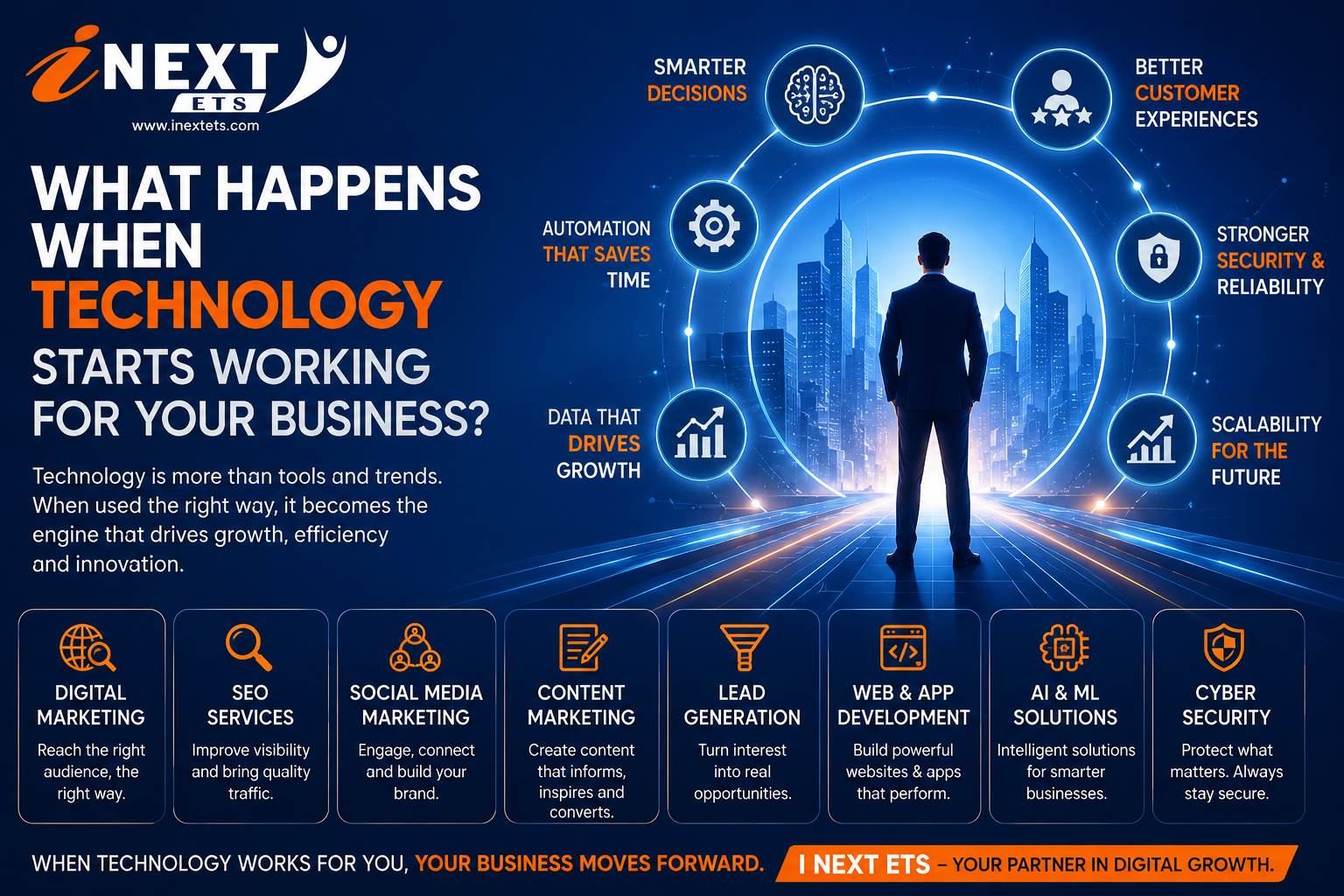
What Happens When Technology Starts Working For Your Business?
Technology is no longer something businesses use only to keep up with competitors. When planned properly, it can become a practical tool for solving everyday challenges, improving customer experiences, and creating new opportunities for growth.
From the way customers discover a company to the way businesses manage information, communicate with audiences, and deliver services, digital technology now influences almost every stage of the customer journey.
The real question is no longer whether a business should use technology. It is how technology can be used more intelligently.
Start With the Problem, Not the Technology
It is easy to get distracted by new technologies.
Artificial intelligence, automation, mobile applications, analytics, and cloud-based systems are constantly evolving. But adopting technology simply because it is popular does not necessarily improve a business.
A better approach is to identify a genuine problem first.
Perhaps customers are struggling to find information. Maybe a business receives too many repetitive enquiries. Perhaps its website is outdated, or its marketing isn't reaching the right audience.
Once the problem is clear, technology can become a solution rather than just another investment.
Your Digital Presence Shapes Customer Decisions
Customers often interact with a business online before they ever speak to someone from the company.
They may search for the brand, visit its website, check its social media, read reviews, or compare it with competitors.
This makes every digital touchpoint important.
A clear website, useful content, responsive design, consistent branding, and easy communication can help create a better first impression.
More importantly, these elements should work together rather than existing as disconnected pieces.
Visibility Comes Before Conversion
A business cannot convert customers it cannot reach.
SEO and digital marketing help businesses become more discoverable to people who are already searching for relevant information, products, or services.
Good SEO isn't simply about adding keywords. It involves understanding what people are looking for and creating content that genuinely answers their questions.
Similarly, digital marketing should focus on reaching relevant audiences rather than chasing numbers without context.
The objective is simple:
Reach the right people, with the right information, at the right time.
Content Can Build Trust Before the First Conversation
Customers don't always make decisions immediately.
They may read a guide, compare services, look for answers to questions, or explore a company's expertise before contacting it.
This is where useful content becomes valuable.
Educational articles, guides, videos, social media posts, case studies, and other forms of content can help businesses communicate their knowledge while addressing customer concerns.
Good content doesn't feel like a sales pitch.
It helps the reader first.
Websites Should Be Designed Around People
A website can have impressive visuals and advanced technology, but if visitors cannot quickly understand what the business does, it isn't doing its job effectively.
A customer-friendly website should make important information easy to find.
Navigation should be intuitive. Pages should work well on mobile devices. Forms should be simple. Content should be clear. Performance should be reliable.
Good web development combines technology with usability to create an experience that works for both the business and its customers.
Mobile Is Part of the Experience
For many people, the smartphone is their primary connection to the internet.
That means businesses need to think beyond desktop websites.
Mobile-friendly websites and well-designed applications can make it easier for customers to access information, interact with services, and complete tasks.
A mobile application can be particularly useful when customers need frequent access to specific features or services.
But again, the purpose should come first.
A useful app solves a problem. A complicated app creates one.
AI Is Opening a New Chapter
Artificial intelligence is changing the way businesses think about productivity and digital experiences.
AI and machine learning can support areas such as automation, data analysis, natural language processing, computer vision, customer assistance, and predictive insights.
However, successful AI adoption requires more than choosing a tool.
Businesses need to understand their data, processes, objectives, and potential risks before deciding where AI can create genuine value.
Used thoughtfully, AI can help teams spend less time on repetitive tasks and more time on work that requires creativity, judgment, and human interaction.
Growth Also Requires Protection
Digital growth brings responsibility.
As businesses collect more customer information and rely on websites, applications, and online systems, cybersecurity becomes increasingly important.
Protecting data, controlling access, monitoring threats, and maintaining secure systems should be part of the digital planning process.
Customers expect businesses to take their information seriously.
Innovation and security therefore need to grow together.
Connecting the Digital Pieces
Digital marketing, SEO, web development, mobile applications, AI, lead generation, and cybersecurity may appear to be separate fields.
In reality, they can influence one another.
A well-optimized website can support marketing. Useful content can improve search visibility. A mobile app can improve customer engagement. AI can support automation. Lead-generation systems can turn digital interest into business opportunities. Cybersecurity can help protect the entire ecosystem.
The strongest digital strategies connect these pieces around a common objective.
Technology Should Create Progress, Not Complexity
Digital transformation doesn't mean making everything more complicated.
In fact, the best digital solutions often make things simpler.
Simpler for customers to find information.
Simpler for businesses to manage processes.
Simpler for teams to communicate.
Simpler for customers to interact with services.
This is where thoughtful technology makes a real difference.
The Next Step Is Smarter, Not Simply More Digital
Businesses don't need every new platform, tool, or technology.
They need the right solutions for their goals.
At I Next ETS, digital marketing and technology services span SEO, social media marketing, content marketing, lead generation, web development, mobile app development, AI & ML, and cybersecurity.
The objective is not simply to help businesses “go digital.”
It is to help them understand where digital solutions can create meaningful value.
Because technology becomes truly powerful when it stops being something a business simply uses and starts becoming something that works for the business.
I Next ETS — Turning Digital Possibilities Into Practical Progress.