
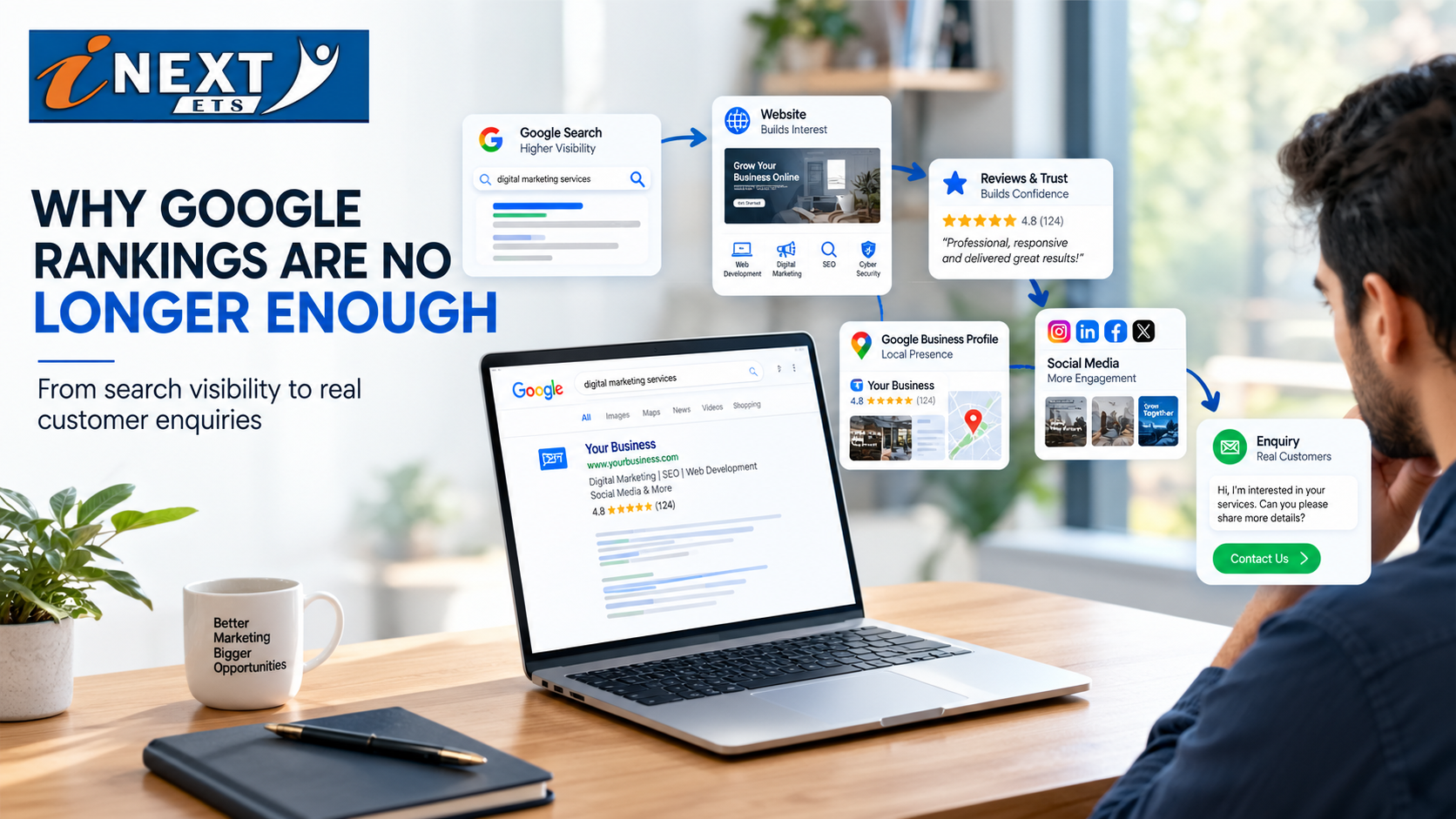
you've worked on your SEO, your website is appearing on Google, and your business may even be ranking near the top for an important search term. But if enquiries are still inconsistent, it can leave you wondering: if people can find my business, why aren't more of them contacting me?
The answer is that a Google ranking is only the beginning of the customer journey.
Search visibility can help people discover your business, but discovery does not automatically lead to a click, trust, enquiry, or purchase. Customers often use several digital touchpoints before deciding which business to contact.
For businesses investing in SEO or digital marketing services in Bhopal, understanding this difference can help shift the focus from simply chasing rankings to building a complete online presence.
Ranking Gets You Seen, But It Doesn't Get You Chosen
A high Google ranking is valuable because it can put your business in front of people searching for relevant information or services.
But what happens after someone sees your result?
They may compare your title with other results. They might check your reviews, visit your website, look at your services, search for your social profiles, compare competitors, or look for a convenient way to contact you.
This means two businesses ranking for similar searches can have very different outcomes.
One may have:
A clear and useful website
Strong service information
Genuine customer reviews
An updated Google Business Profile
Easy contact options
Helpful content
A professional online presence
Another may simply have a good ranking.
The ranking gets both businesses noticed. The rest of the digital experience can influence what happens next.
What Happens Between a Google Search and a Customer?
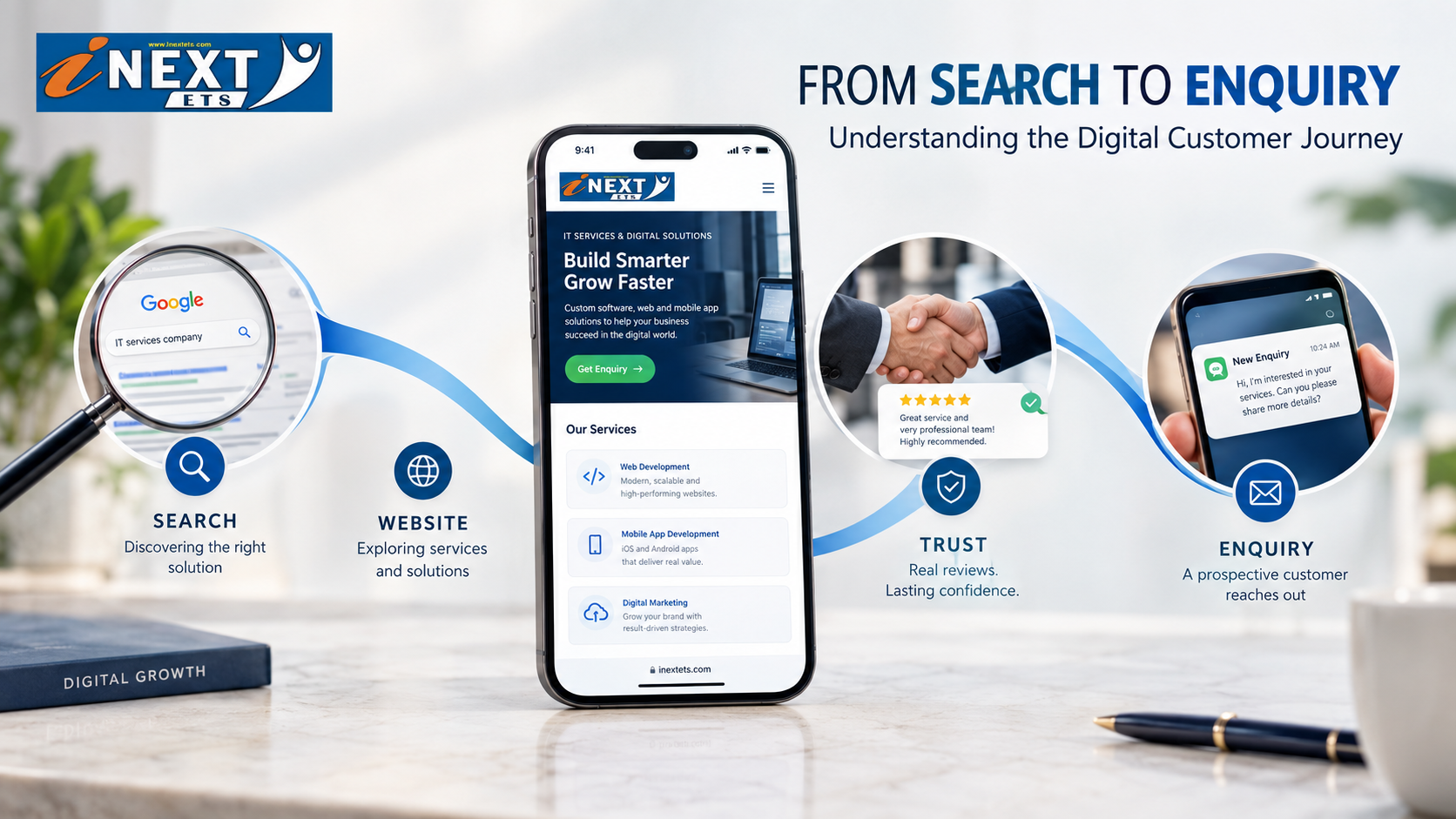 Customers rarely move directly from a search result to becoming a customer. Their journey can involve several steps:
Search → Impression → Click → Website → Trust → Enquiry → Follow-up → Customer
The exact journey differs depending on the business, product, service, and customer.
For example, imagine a business in Bhopal ranking near the top for a valuable local search. A potential customer clicks the result but finds an outdated website, unclear service information, few trust signals, and no obvious way to make an enquiry.
The business successfully earned visibility, but the experience after the click created friction.
This is why looking only at rankings can give an incomplete picture of digital performance.
Why SEO Alone Isn't the Full Picture
SEO is an important part of digital marketing, but organic search is only one channel through which customers discover and evaluate businesses.
Search Intent Matters
Not every searcher is ready to buy.
Someone searching for:
"What is SEO?"
is likely researching.
Someone searching for:
may be comparing providers.
Someone searching for:
"SEO agency near me"
may have stronger commercial intent.
A page can rank well but attract visitors whose needs do not match the service being offered.
That is why effective SEO should consider why people search, not just which keywords they use.
Local Presence Matters
For local businesses, customers may interact with a Google Business Profile, Google Maps, reviews, location information, photos, business hours, and other local information before visiting a website.
Keeping these details accurate and useful can make the business easier for potential customers to evaluate.
Local SEO therefore isn't simply about putting a city name into website content. It involves making the business information available and useful across relevant local search experiences.
Also read this: how-bhopal-businesses-can-turn-local-searches-into-real-customers-in-2026
Your Website Has to Convert Attention Into Action
Getting someone onto your website is only part of the job.
A visitor should be able to understand:
What your business offers
Who your services are for
Where you operate
Why they should consider your service
What they should do next
If visitors have to search through several pages to understand your offering or find a contact option, some may leave before making an enquiry.
SEO and website experience should therefore work together.
What Businesses Should Build Beyond Google Rankings
A broader digital marketing strategy can connect multiple channels instead of depending entirely on organic search.
1. Local SEO and Google Business Profile
For businesses serving a specific location, local SEO can help improve discoverability in relevant local searches.
Maintain accurate business information, keep your Google Business Profile updated, use relevant categories and descriptions, and encourage genuine customer reviews.
The objective should be to make it easier for local customers to understand and evaluate your business.
2. Content That Answers Real Customer Questions
Good content should solve problems.
Instead of creating articles simply to insert keywords, think about the questions customers ask before contacting your business.
For example:
What does the service include?
Who needs it?
How does the process work?
What should I consider before choosing a provider?
What mistakes should I avoid?
What questions should I ask a service provider?
This approach can support search visibility while also helping potential customers make informed decisions.
3. A Website Designed for Users
Your website should do more than provide a place for keywords.
Important elements can include:
Clear service pages
Simple navigation
Mobile-friendly design
Useful and accurate information
Clear calls to action
Easy-to-find contact details
Relevant trust signals
The exact requirements will depend on the type of business and its audience.
4. Social Media as an Additional Trust Layer
Potential customers sometimes check a company's social profiles before contacting it.
An active and relevant social presence can provide additional context about the business, its services, updates, projects, or expertise.
That doesn't mean every business needs to be active on every platform. The better approach is to focus on the channels where the target audience is actually present.
5. Paid Advertising Where It Makes Sense
SEO and paid advertising serve different purposes.
Google Ads and social advertising can provide additional visibility for specific services, audiences, locations, or campaigns. They can complement organic search when a business has a clear objective and appropriate tracking.
However, paid visibility should not be confused with guaranteed conversions.
An advertisement can generate a click, but the landing page, offer, audience, and follow-up still matter.
6. Lead Follow-Up
Suppose your digital marketing efforts generate an enquiry.
What happens next?
If calls, forms, WhatsApp messages, or other enquiries are not handled consistently, opportunities can be missed.
A simple lead management process can help businesses:
Record incoming enquiries
Identify the source of leads
Respond consistently
Follow up when appropriate
Track which enquiries become qualified opportunities
Lead generation is therefore not only about getting enquiries. It is also about having a process for handling them.
What Should You Measure Besides Google Rankings?
Rankings are useful, but they shouldn't be the only metric used to evaluate digital marketing.
Depending on your business, useful measurements may include:
Search impressions
Organic clicks
Click-through rate
Relevant organic traffic
Engagement on important pages
Phone calls
Form submissions
Enquiries
Qualified leads
Lead sources
Conversion rates
For example, if a keyword moves from position 12 to position 5 but generates little relevant traffic or few enquiries, the ranking improvement may not tell the whole story.
On the other hand, a page that attracts fewer visitors but produces relevant enquiries may be more valuable to the business.
The right metrics depend on the business model and its goals.
Common Mistakes Businesses Make
Many businesses fall into the same digital marketing traps:
Treating SEO as a one-time project
Focusing on rankings without considering search intent
Ignoring Google Business Profile information
Publishing content without understanding customer questions
Sending traffic to unclear or outdated website pages
Making social media active only occasionally
Running paid campaigns without clear objectives
Failing to track where enquiries originate
Assuming more website traffic automatically means more customers
Measuring success only through keyword positions
Avoiding these mistakes doesn't guarantee business growth, but it can create a more complete foundation for evaluating and improving digital marketing efforts.
Questions to Ask a Digital Marketing Agency in Bhopal
If you're considering a digital marketing agency in Bhopal, don't limit the conversation to:
"How quickly can you rank my website?"
Also ask:
How will you identify the search terms that matter to my business?
How will you measure performance beyond rankings?
What will you review on my website?
How will local SEO fit into the strategy?
How will enquiries be tracked?
What role should content play?
Would paid advertising make sense for my goals?
How will we know which marketing channels are generating relevant enquiries?
How often will the strategy and results be reviewed?
A good discussion should focus on your business objectives rather than a single ranking position.
A Practical Digital Visibility Checklist
Before investing more heavily in digital marketing, review your current online presence.
Search
Can customers find your business for relevant searches?
Are the keywords attracting the right audience?
Local
Is your Google Business Profile accurate?
Are your business details consistent?
Are genuine reviews available?
Website
Is your website easy to navigate?
Are your services clearly explained?
Can visitors easily contact you?
Content
Does your content answer genuine customer questions?
Are important service pages useful and up to date?
Social
Are relevant social profiles maintained?
Does your content provide useful information or context?
Leads
Are enquiries being tracked?
Do you know which channels generate them?
Is there a consistent follow-up process?
Setting Realistic SEO Expectations
SEO can take time, and there is no universal timeline that applies to every business.
Competition, website history, technical quality, content, search demand, location, industry, and the scope of optimization can all affect progress.
Some changes may become visible within months, while competitive search terms and broader organic growth can require substantially more time and consistent effort.
For this reason, businesses should be cautious about anyone promising a specific Google position or a fixed number of leads.
A more useful approach is to establish measurable objectives, monitor relevant data, and adjust the strategy based on what the audience actually does.
Bringing It All Together
Google rankings still matter. Being visible when potential customers search for a relevant service can create valuable opportunities.
But ranking is not the entire customer journey.
A person may see your business on Google, compare several results, check reviews, visit your website, look at your social presence, compare competitors, and only then decide whether to contact you.
That is why businesses should think beyond:
"Where do we rank?"
and also ask:
"What happens after people find us?"
For businesses exploring digital marketing services in Bhopal, the goal should be to build a connected online presence where search visibility, local presence, useful content, website experience, appropriate advertising, and lead follow-up support one another.
The objective isn't simply to be found.
It's to make being found useful.
Go beyond rankings. Build a digital presence that drives meaningful business opportunities.
Explore Digital Marketing Solutions with iNext ETS
www.inextets.in