
Website Design Cost in India (2026): Prices, Packages & Complete Budget Guide
WEBSITE DEVELOPMENT • INDIA • 2026
A practical guide to website pricing, project scope, recurring costs and choosing a development partner.
Website Design Cost in India: What Should You Budget in 2026?
The website design cost in India in 2026 depends on your business goals, required features, design complexity and long-term maintenance needs. A basic landing page may need a relatively small investment, while an eCommerce store or custom web application can require a significantly larger budget.
In this guide, iNext ETS explains indicative website development costs, what different budgets can include, the additional expenses businesses should plan for, and how to compare website development quotations.
Whether you are launching a startup, building a company website or selling products online, this guide will help you plan your budget and choose a solution that fits your business needs.
Quick answer
Before choosing a package, compare the number of pages, functionality, content, SEO setup, maintenance and ownership arrangements — not just the initial price.
The goal should not be to find the cheapest website at any cost. It should be to invest in a website that explains the offer clearly, works well on mobile, helps visitors take the next step and can grow with the business.
iNext ETS helps businesses build and strengthen their digital presence through website development and related digital services, including SEO, digital marketing and lead generation. A website is more valuable when its design, content and visibility work together — not when it simply looks attractive.
Website Design Cost in India in 2026: Indicative Budget Ranges
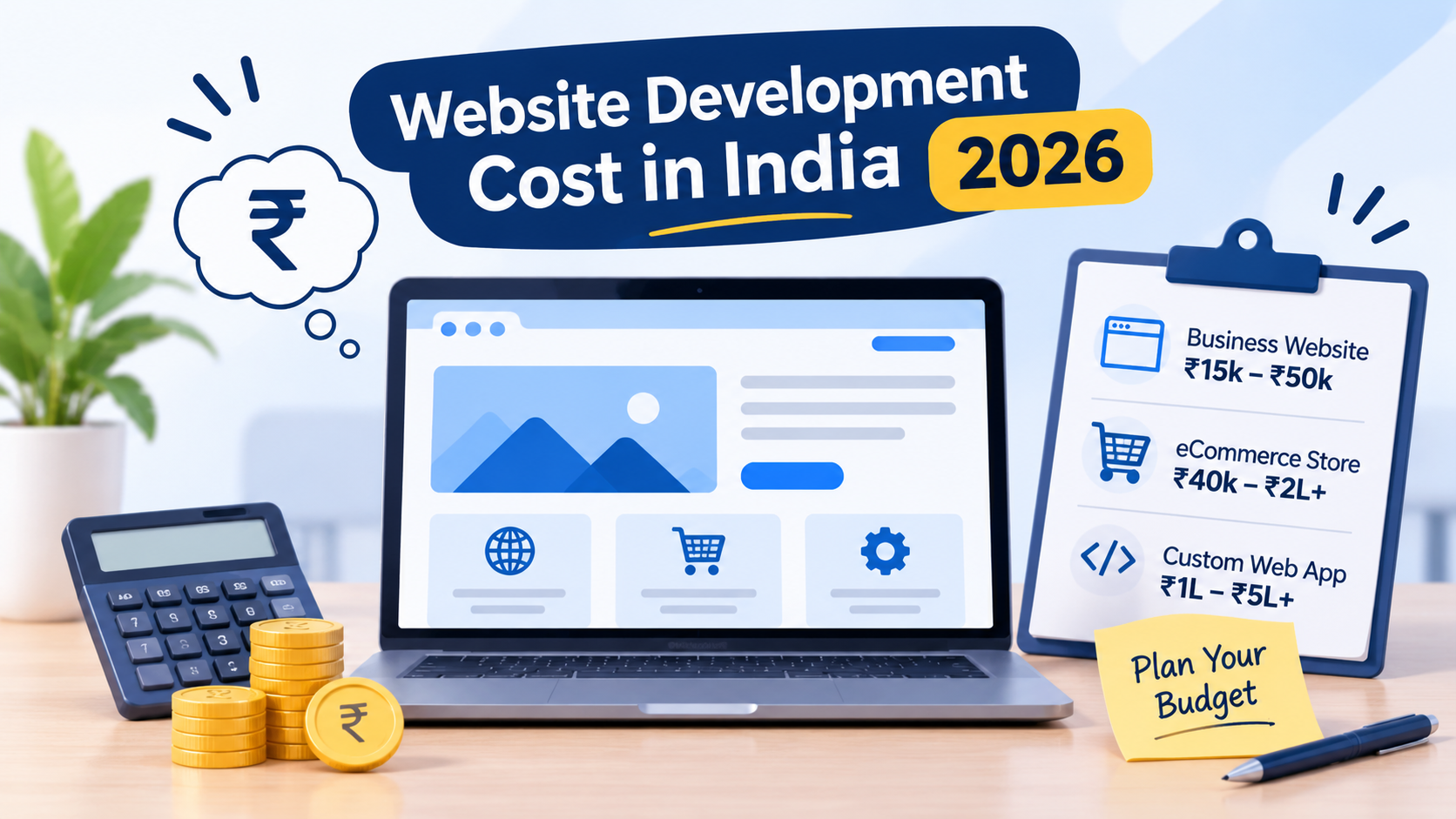
The ranges below are draft planning estimates for common project types. They are not a quotation from iNext ETS. Final pricing varies by provider, technology, content, functionality and project scope.
| Website type | Draft estimate | What to specify as included |
|---|---|---|
| Basic landing page | ₹5,000–₹20,000 | Sections, enquiry form, mobile layout |
| Small business website | ₹15,000–₹50,000 | Page count, forms, basic setup |
| Professional business website | ₹30,000–₹1,00,000 | Service pages, blog, analytics, tailored design |
| eCommerce website | ₹40,000–₹2,00,000+ | Product limits, payments, shipping, inventory |
| Custom web application | ₹1,00,000–₹5,00,000+ | Accounts, dashboards, integrations, testing |
These figures are indicative planning estimates, not fixed quotations or verified market averages. Actual costs vary by project scope, technology, content requirements, functionality and service provider. Confirm current pricing and the complete list of deliverables before making a decision.
Not sure which website package fits your business?
Share your requirements with iNext ETS to discuss the pages, features and budget that make sense for your project. Visit www.inextets.com or call +91 99811 22493.
What Is Included in Website Development Cost?
A website development quotation may cover several different services. Understanding each component helps businesses compare proposals fairly.
- Planning and structure: Defining the website's purpose, pages, navigation and customer journey.
- UI/UX and visual design: Creating layouts that reflect the brand and make information easy to find.
- Development: Building pages, responsive layouts, forms and required functionality.
- Content and images: Writing website copy, preparing graphics and sourcing or producing photographs.
- Technical and SEO setup: Configuring page titles, metadata, crawlable links, sitemaps and other relevant foundations.
- Testing and launch: Checking mobile layouts, forms, links, browser compatibility and key user journeys.
- Training and support: Explaining how to manage the website and clarifying post-launch assistance.
Not every quotation includes every item. Ask your developer to specify which deliverables are included, which are charged separately and which recurring costs you will need to pay.
1. Basic Website Design Cost
A basic website suits a startup, independent professional or small business that needs a straightforward online presence. It may include a homepage or landing page, information about services, contact details, social links and a simple enquiry form.
A basic landing page may fit within an indicative ₹5,000–₹20,000 budget. A multi-page website can cost more depending on the number of sections, content and level of customisation.
This option works best when the main goal is to explain what the business offers and make it easy for potential customers to get in touch. Even a small website should be mobile-friendly, easy to navigate and clear about the next step.
2. Business Website Development Cost
A professional business website often needs more than a few informational pages. It may include dedicated service pages, a portfolio, testimonials, a blog, analytics, enquiry forms and a design system that matches the brand.
An indicative budget may range from ₹30,000 to ₹1,00,000, depending on scope. Businesses should confirm whether copywriting, photography, SEO setup, analytics configuration and post-launch support are included.
For service businesses, a website should help visitors answer three questions quickly: What does the company do? Why might it be a suitable choice? How can I enquire? Clear messaging and simple conversion paths are often more useful than decorative effects.
3. eCommerce Website Development Cost
An eCommerce website supports product discovery, ordering and online payments. Pricing depends on catalogue size, product variations, payment methods, shipping rules, inventory management, customer accounts and any connections to other business systems.
An indicative budget may range from ₹40,000 to ₹2,00,000 or more. A store on a standard platform with straightforward needs may cost less than a highly customised store with complex workflows.
Before choosing a package, ask about product upload limits, payment gateway setup, order notifications, shipping integration, tax configuration, security, training and maintenance. Also account for payment processing fees and any recurring platform or software subscriptions.
4. Custom Website and Web Application Cost
Custom development may be appropriate when a business needs functionality that a standard website package cannot efficiently provide. Examples include booking platforms, member portals, customer dashboards, internal business tools and applications connected to external APIs.
An indicative starting budget may be around ₹1,00,000, with complex projects reaching several lakhs or more. The final cost depends on research, UI/UX design, frontend and backend development, database structure, access controls, integrations, testing and deployment.
Reduce uncertainty by documenting the core requirements before development. Agree on milestones, acceptance criteria, ownership of source code, documentation, support arrangements and how changes to scope will be priced.
What Factors Affect Website Design Charges in India?
Design complexity and user experience
A customised design requires more planning than a lightly modified template. Unique page layouts, interactive elements, animations, prototyping and multiple revision rounds can increase design time. Prioritise a clear user journey and consistent visual hierarchy over effects that do not help users.
Number of pages and content
More pages can mean more design, content, implementation and testing work. But page count alone is not enough to estimate cost: a single complex page may require more effort than several simple pages. Confirm who will supply the text, images and other assets.
Features and integrations
Booking tools, payment gateways, customer portals, CRM connections, advanced search and third-party APIs may increase implementation and testing requirements. List essential features before requesting a quotation.
SEO and content requirements
A project may include basic technical and on-page SEO configuration, but that is not the same as an ongoing SEO campaign. Ask whether keyword research, content writing, metadata, redirects, structured data, sitemap setup and Search Console configuration are included.
Mobile responsiveness, performance and testing
A website should work across common screen sizes and browsers. Image optimisation, efficient code, accessible forms and testing of important user journeys help improve usability. Ask how the provider tests the site before launch.
Technology, hosting and provider experience
Hosting needs depend on traffic, functionality and reliability requirements. Paid themes, plugins, licences or specialist infrastructure may add recurring expenses. Freelancers and agencies may price differently, so compare their process, experience, deliverables and support — not just their headline price.
Additional Website Costs to Budget For
The development fee is not always the total cost of owning a website. Ask for a clear breakdown of one-time and recurring expenses.
| Expense | What to check |
|---|---|
| Domain name | Registration, renewal and ownership of the domain |
| Web hosting | Storage, traffic limits, backups and support |
| SSL / HTTPS | Secure configuration and any applicable renewal costs |
| Maintenance | Updates, backups, monitoring and bug fixes |
| Premium tools | Paid plugins, themes, fonts or software subscriptions |
| Content creation | Copywriting, photography, graphics and product data |
| SEO and marketing | Ongoing content, optimisation and advertising budgets |
How to Choose the Right Website Development Company
Review relevant work
Look at live websites or case studies that match your type of project. Test mobile navigation, page clarity, forms and loading behaviour instead of judging a portfolio only by screenshots.
Get a written scope
Ask for a list of pages, features, integrations, revision rounds, content responsibilities and deliverables. A clear scope makes different quotations easier to compare.
Confirm ownership and access
Clarify who will own the domain, hosting account, source code, design files and analytics accounts. Keep business-critical accounts under the business's control wherever possible.
Ask about SEO foundations
Confirm that important pages can be crawled and indexed, URLs are sensible, metadata is editable and redirects are handled where required. No developer can guarantee a specific Google ranking.
Understand maintenance and communication
Ask who handles updates, backups, security issues and bug fixes after launch. Confirm response expectations, additional charges and how project progress will be communicated.
How to Reduce Website Development Costs Without Sacrificing Quality
- Prioritise essentials: Start with the pages and features users need most.
- Choose a suitable platform: Use a content management system when it fits the project; reserve custom development for requirements that justify it.
- Prepare content early: Finalise text, images and brand assets to reduce delays.
- Limit avoidable revisions: Agree on goals, references and approval steps before design begins.
- Plan for growth: Choose a maintainable foundation without overengineering the first release.
- Compare like-for-like quotes: Check what each proposal includes and excludes.
Why Website Design and SEO Should Work Together
A visually appealing website may still struggle to attract relevant visitors if search engines cannot access its important pages or if the content does not match what people are looking for. Website development and SEO should therefore be planned together.
Useful foundations include clear navigation, descriptive page titles, helpful content, mobile-friendly layouts, logical internal links, appropriate image optimisation and a crawlable site structure. These practices support discoverability but do not guarantee rankings or traffic.
Why Choose iNext ETS for Your Website and Digital Growth Needs?
A business website should do more than look professional. It should communicate the value of the business, make services easy to understand and give potential customers a clear next step. That is why website development should be planned alongside the company's visibility and lead-generation goals.
iNext ETS works across digital services including website development, SEO, digital marketing and lead generation. For businesses evaluating a new website or improving an existing one, this creates an opportunity to treat the website as part of a wider digital growth plan — not as an isolated design task.
A practical starting point
Before requesting a proposal, prepare a short brief covering your industry, target audience, essential pages, required features, examples you like, preferred timeline and approximate budget. This makes it easier to discuss a realistic scope and avoid unnecessary additions.
Conclusion
Website design cost in India in 2026 depends on what the website needs to accomplish. A landing page, a professional company website, an eCommerce store and a custom web application have different design, development and maintenance requirements.
Define your goals before choosing a package, compare detailed proposals and account for recurring costs as well as the initial build. Prioritise a useful mobile experience, clear content, reliable functionality and SEO foundations.
Planning a new website?
Contact iNext ETS to discuss your business goals, required features and website development budget.
Website: www.inextets.com | Phone: +91 99811 22493